Industrial renewable energy refers to the use of renewable sources such as solar, wind, hydropower, biomass, and geothermal energy to meet the electricity and heat requirements of industrial facilities. It is becoming an important part of modern energy management as manufacturers and other large energy users look for ways to improve energy efficiency and reduce dependence on fossil fuels.
Industrial facilities can use renewable electricity in several ways. A factory may generate solar power on its premises, use electricity from a renewable power project through an approved electricity arrangement, or combine renewable generation with battery energy storage.
The approach depends on the facility, energy demand, location, grid connection, production schedule, and applicable regulations.
| Renewable source | Common industrial application | Main characteristic |
|---|---|---|
| Solar PV | Factory electricity, warehouses, process equipment | Widely deployable |
| Wind | Large electricity loads and hybrid systems | Strong generation potential in suitable regions |
| Hydropower | Grid electricity and industrial supply | Relatively consistent generation |
| Biomass | Process heat and electricity | Can use suitable organic feedstocks |
| Geothermal | Heat and electricity in suitable locations | Location dependent |
| Battery storage | Energy balancing and backup support | Stores electricity for later use |
Why Industrial Renewable Energy Matters
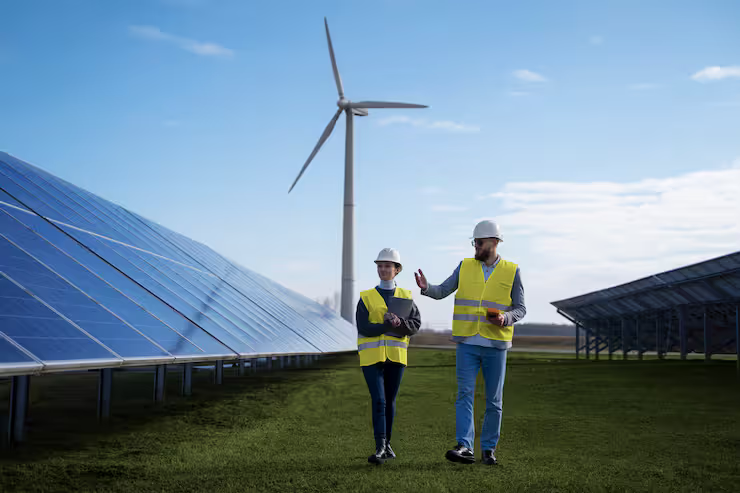
Industry is one of the world's major energy-consuming sectors. Manufacturing facilities can require substantial electricity and heat for motors, compressors, furnaces, pumps, refrigeration, production lines, and other equipment.
The International Energy Agency reported in December 2025 that industries relying mainly on low-temperature heat and steam represent roughly 70% of global industrial energy consumption. The report also highlights electrification of industrial heat as an important pathway for integrating renewable electricity into industrial energy systems.
Renewable energy can contribute to several important objectives:
- Reduce dependence on fossil-fuel-based electricity.
- Support industrial decarbonisation strategies.
- Improve energy diversification.
- Increase the use of clean electricity for industrial equipment.
- Support long-term energy planning.
- Complement industrial energy efficiency programs.
- Help facilities respond to renewable energy consumption requirements where applicable.
Renewable power does not automatically eliminate emissions from an industrial facility. Manufacturing processes can also produce emissions from fuels, chemical reactions, transportation, and other activities. Therefore, renewable electricity is generally one part of a broader energy and carbon management strategy.
How Renewable Energy Is Used in Industry
Industrial renewable energy systems can be designed around the specific energy profile of a facility.
On-Site Solar Power
Solar photovoltaic systems convert sunlight into electricity. Industrial buildings often have large rooftops or nearby land areas that can support solar generation.
Solar electricity can be used during production hours, when electricity demand may be high. Generation can also be combined with battery storage where appropriate.
Wind Energy
Wind turbines can provide renewable electricity at locations with suitable wind resources. Large industrial facilities may also use electricity generated by wind projects through the electricity grid, subject to applicable regulations and contractual arrangements.
Biomass Energy
Biomass can provide heat or electricity when suitable organic materials are available. Industries such as food processing, paper manufacturing, and some agricultural operations may have biomass resources associated with their processes.
Sustainability depends on the source, transportation requirements, land impacts, and overall lifecycle emissions.
Renewable Electricity and Storage
Battery energy storage systems can store electricity and release it later. This can help manage differences between renewable generation and industrial demand.
Storage is particularly relevant because solar and wind generation varies with weather and time of day. Grid management, demand flexibility, and storage therefore become increasingly important as renewable penetration rises.
Key Benefits and Challenges
Industrial renewable energy can support environmental and operational objectives, but implementation requires technical planning.
| Area | Potential benefit | Important consideration |
| Energy supply | Greater diversification | Renewable output can vary |
| Emissions | Lower electricity-related emissions | Lifecycle impacts still matter |
| Energy management | Better integration with efficiency measures | Requires monitoring and planning |
| Grid flexibility | Storage can shift electricity use | Storage capacity must match demand |
| Industrial heat | Electrification can connect heat demand with renewable power | Equipment may require modification |
| Sustainability reporting | Better renewable-energy tracking | Accurate data and documentation are important |
Recent Developments in Renewable Energy
Renewable energy continued to expand rapidly during 2025 and into 2026.
According to the IEA's Global Energy Review 2026, global renewable capacity additions reached approximately 800 GW in 2025, an annual record. Solar photovoltaic technology accounted for more than three-quarters of new renewable capacity, while wind accounted for about 20%.
India was among the major markets showing particularly strong growth. The IEA reported that India's annual renewable capacity additions increased by almost 60% in 2025, including nearly 50 GW of solar PV and more than 6 GW of wind capacity.
India's Ministry of New and Renewable Energy reported cumulative renewable capacity of about 288.59 GW as of June 30, 2026, including approximately 162.15 GW of solar and 57.44 GW of wind capacity.
Another important development is the increasing connection between renewable electricity and industrial heat. The IEA's Renewables for Industry report, published on December 23, 2025, identifies electrification of low-temperature heat and steam as an important pathway for increasing renewable energy use in industry.
Battery storage is also becoming more significant. The IEA reported that global battery storage additions increased by about 40% during 2025, reaching almost 110 GW of new capacity.
Renewable Energy Policies in India
India's renewable energy landscape is influenced by national legislation, electricity regulations, renewable consumption requirements, and state-level rules.
The Electricity (Promoting Renewable Energy Through Green Energy Open Access) Rules, 2022 were notified on June 6, 2022. The framework was designed to facilitate access to renewable electricity, including for commercial and industrial consumers. Subsequent amendments were issued in 2023.
The rules also established provisions relating to green energy open access. The framework uses a 100 kW threshold for eligible consumers in relevant circumstances, while captive consumers have specific provisions under the rules. State electricity regulatory commissions also have important responsibilities in implementation.
Another important policy area is the Renewable Consumption Obligation (RCO). The Ministry of Power's framework under the Energy Conservation Act includes minimum non-fossil energy consumption requirements for designated consumers. The Bureau of Energy Efficiency has published RCO compliance and reporting materials, including updates during 2025.
Battery energy storage is also receiving policy attention. Government guidelines cover battery storage systems and renewable electricity with storage, reflecting the growing need for flexibility as renewable generation increases.
Because electricity regulation can change and state-level rules may differ, industrial organizations should consult the latest notifications from the Ministry of Power, MNRE, BEE, CERC, and the relevant State Electricity Regulatory Commission before making regulatory decisions.
Tools and Resources for Industrial Renewable Energy
Several reliable resources can help readers understand renewable power, energy efficiency, and industrial energy planning.
Government and Energy Resources
- Ministry of New and Renewable Energy (MNRE): Renewable-energy capacity data, programs, policy updates, and official statistics.
- Ministry of Power: Electricity rules, green energy open access regulations, and electricity-sector notifications.
- Bureau of Energy Efficiency (BEE): Energy efficiency information, designated-consumer resources, and Renewable Consumption Obligation materials.
- International Energy Agency (IEA): Global renewable energy, electricity, industrial energy, and technology analysis.
Useful Planning Tools
Industrial energy planning commonly uses:
- Solar generation estimation tools.
- Electricity consumption dashboards.
- Energy monitoring systems.
- Carbon-emissions calculators.
- Battery storage sizing calculators.
- Renewable electricity forecasting tools.
- Energy-efficiency assessment spreadsheets.
- Power-quality monitoring equipment.
The most useful tool depends on whether the objective is renewable generation assessment, energy efficiency, emissions measurement, storage planning, or regulatory reporting.
Frequently Asked Questions
What is industrial renewable energy?
Industrial renewable energy is the use of renewable sources such as solar, wind, hydropower, biomass, and geothermal energy to support industrial electricity or heat requirements.
Why is renewable energy important for manufacturing?
Manufacturing can require substantial electricity and process heat. Renewable energy can diversify the energy mix, support carbon-reduction strategies, and increase the use of low-emission electricity.
Can factories use solar and battery storage together?
Yes. Solar PV can generate electricity during suitable sunlight conditions, while batteries can store some electricity for later use. The appropriate system depends on electricity demand, operating schedules, grid conditions, and technical requirements.
What is Green Energy Open Access in India?
Green Energy Open Access is an electricity framework that facilitates eligible consumers' access to renewable electricity. India's rules were introduced in 2022 and subsequently amended to address implementation and eligibility provisions.
Does renewable electricity eliminate all industrial emissions?
No. Renewable electricity can reduce emissions associated with electricity consumption, but industrial emissions can also come from process heat, fuels, chemical reactions, transportation, and other activities. A complete industrial decarbonisation strategy therefore usually considers multiple emission sources.
Conclusion
Industrial renewable energy is becoming an important component of modern energy management. Solar, wind, hydropower, biomass, and energy storage can help industrial facilities diversify their energy mix while supporting renewable electricity use and carbon-reduction objectives.
Recent developments show that renewable capacity is expanding rapidly worldwide, with solar PV accounting for a particularly large share of new capacity. India has also recorded strong renewable growth, while policies such as Green Energy Open Access and Renewable Consumption Obligations are shaping how industrial consumers interact with renewable electricity.
For industrial organizations, the most effective approach is generally based on a combination of energy efficiency, accurate energy monitoring, suitable renewable generation, storage where appropriate, and awareness of current regulations. As renewable technologies and electricity systems continue to evolve, these elements are likely to become increasingly connected within industrial energy planning.