Pressure sensors are important components used to measure the force exerted by gases or liquids on a surface. They convert pressure into an electrical signal that can be monitored, displayed, recorded, or used by an automated control system. Because accurate pressure measurement is important in manufacturing, automotive systems, medical equipment, HVAC systems, energy infrastructure, and industrial automation, pressure sensors are widely used across modern industries.
The technology behind pressure sensors has developed considerably as industries have adopted digital monitoring, smart equipment, and automated process control. Modern pressure sensors can be designed for different pressure ranges, operating environments, measurement requirements, and communication systems. Understanding their operating principles and applications helps engineers, technicians, and general readers better understand pressure measurement technology.
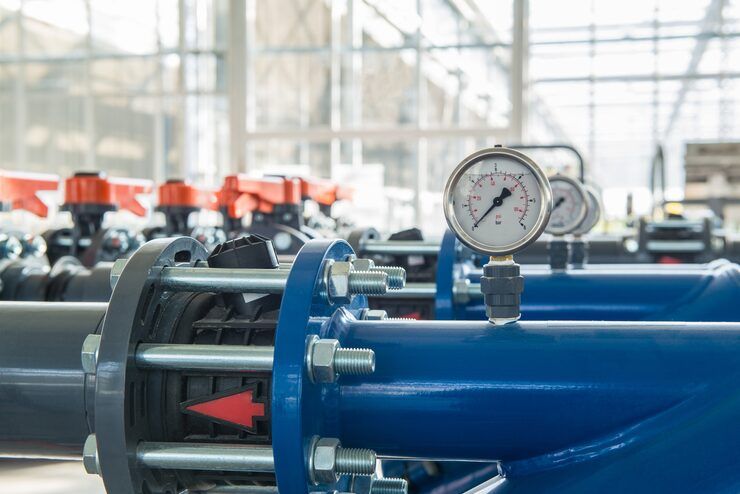
What Is a Pressure Sensor?
A pressure sensor is an electronic or electromechanical device that detects pressure and produces a corresponding output signal. Pressure can be generated by air, water, hydraulic fluid, gases, or other substances. The sensor detects changes in pressure and converts those changes into a measurable electrical response.
In industrial instrumentation, pressure sensors are often integrated with monitoring and control systems. The output may be transmitted to a display, programmable logic controller (PLC), data acquisition system, or industrial automation platform. This allows pressure conditions to be monitored continuously and can help equipment operators identify changes in operating conditions.
How Do Pressure Sensors Work?
The basic operating principle involves a sensing element that responds when pressure is applied. Depending on the sensor design, the sensing element may use a diaphragm, strain gauge, piezoresistive element, capacitive structure, or another pressure-sensitive technology.
When pressure changes, the sensing element undergoes a physical or electrical change. Electronic circuitry then converts this change into an output signal. The signal can be represented as a voltage, current, resistance, digital value, or communication signal.
In a typical industrial pressure measurement system, the process can be described as:
Pressure → Sensing Element → Signal Conversion → Electrical Output → Monitoring or Control System
The accuracy and response of this process depend on the sensor design, calibration, environmental conditions, and measurement range.
Types of Pressure Sensors
Absolute Pressure Sensors
Absolute pressure sensors measure pressure relative to a vacuum reference. They are useful when atmospheric pressure variations need to be excluded from the measurement.
These sensors are commonly associated with applications such as vacuum systems, atmospheric monitoring, altitude measurement, and certain industrial process measurements where an absolute reference is important.
Gauge Pressure Sensors
Gauge pressure sensors measure pressure relative to the surrounding atmospheric pressure. They are widely used in industrial equipment, hydraulic systems, pneumatic machinery, and process control applications.
For example, a gauge pressure sensor can measure the pressure inside a pipeline while using the surrounding atmospheric pressure as its reference point.
Differential Pressure Sensors
Differential pressure sensors measure the difference between two pressure points. They are particularly useful when monitoring pressure changes across filters, pipes, valves, ducts, and other components.
In HVAC and industrial systems, differential pressure measurement can help monitor airflow, filtration conditions, and equipment performance.
Piezoresistive Pressure Sensors
Piezoresistive pressure sensors use changes in electrical resistance caused by mechanical deformation. When pressure is applied to the sensing element, its resistance changes, allowing the system to determine the applied pressure.
This technology is widely used because it can provide compact designs and suitable measurement performance across many applications.
Capacitive Pressure Sensors
Capacitive pressure sensors detect changes in capacitance caused by movement of a pressure-sensitive diaphragm. They can provide high sensitivity and are used in various industrial, environmental, and electronic measurement systems.
Their design can be suitable for applications where accurate detection of relatively small pressure changes is required.
Piezoelectric Pressure Sensors
Piezoelectric pressure sensors generate an electrical response when mechanical stress is applied to a piezoelectric material. They are particularly useful for dynamic pressure measurements and rapidly changing pressure conditions.
These sensors are commonly associated with vibration, combustion analysis, impact measurement, and other applications involving transient pressure changes.
Key Applications of Pressure Sensors
Industrial Automation
Pressure sensors play an important role in industrial automation by providing real-time information about hydraulic and pneumatic systems. Automated equipment can use pressure data to monitor operating conditions and maintain predefined process parameters.
In manufacturing environments, pressure measurement can therefore form part of a larger industrial instrumentation and process control system.
HVAC Systems
Heating, ventilation, and air-conditioning systems use pressure measurement for applications such as airflow monitoring, filter monitoring, and system diagnostics. Differential pressure sensors can help determine pressure differences within air-handling equipment and ventilation systems.
Accurate pressure monitoring can support efficient operation and maintenance of HVAC equipment.
Automotive Systems
Pressure sensors are used in several automotive applications, including engine systems, fuel systems, transmission systems, tire pressure monitoring, and climate-control equipment.
Modern vehicles increasingly depend on electronic sensors to provide real-time information to control modules. Pressure measurement is one part of this broader automotive sensor technology.
Medical Equipment
Medical equipment can use pressure sensors for applications involving air, gases, and fluids. Examples include respiratory equipment, blood-pressure monitoring systems, infusion systems, and laboratory instruments.
Medical applications require sensor technologies appropriate for the specific measurement range, accuracy requirements, environmental conditions, and applicable regulatory standards.
Energy and Process Industries
Pressure measurement is important in power generation, oil and gas processing, chemical processing, water treatment, and other process industries. Sensors can monitor pressure in pipelines, vessels, pumps, compressors, and processing equipment.
In these environments, pressure data may be integrated with industrial control and monitoring systems to provide information about process conditions.
Important Pressure Sensor Specifications
Measurement Range
Measurement range indicates the minimum and maximum pressure a sensor is designed to measure. Selecting an appropriate range is important because a sensor should be suitable for the expected operating conditions without unnecessarily reducing measurement resolution.
Accuracy
Accuracy describes how closely the sensor's measurement corresponds to the actual pressure. The required accuracy depends on the application. Precision process control applications may require different specifications than general equipment monitoring.
Response Time
Response time indicates how quickly the sensor responds to a change in pressure. Applications involving rapidly changing pressure conditions may require sensors with faster response characteristics.
Operating Temperature
Temperature can influence sensor performance. Therefore, the expected operating temperature should be considered when evaluating pressure measurement equipment, particularly in industrial environments.
Output Signal
Pressure sensors can provide different types of output, including analog voltage, current signals, resistance-based outputs, or digital communication. The appropriate output depends on the monitoring or control system into which the sensor will be integrated.
Pressure Sensors and Industrial Automation
The growth of industrial automation has increased the importance of reliable sensor technology. Pressure sensors can provide continuous measurement data to control systems, allowing equipment conditions to be observed without relying entirely on manual measurement.
When integrated with PLCs, supervisory control systems, industrial networks, or data acquisition equipment, pressure data can become part of a broader digital monitoring system. This supports process visibility and can help organizations identify changes in equipment conditions.
Smart Pressure Sensors
Smart pressure sensors combine pressure measurement with electronic processing and communication capabilities. Depending on the design, they may provide features such as digital communication, diagnostic information, calibration data, temperature compensation, or configurable measurement parameters.
The development of Industrial Internet of Things (IIoT) technology has also increased interest in connected sensor systems. Smart sensors can provide measurement information to digital platforms where data can be analyzed alongside other equipment information.
Factors to Consider When Selecting a Pressure Sensor
Choosing a pressure sensor requires more than comparing a single specification. The sensor should match the physical and technical requirements of the intended application.
Important considerations include:
- Pressure type: absolute, gauge, or differential
- Expected pressure range
- Required measurement accuracy
- Operating temperature
- Media compatibility
- Response time
- Electrical output
- Installation requirements
- Environmental conditions
- Calibration requirements
- Communication interface
- Applicable industry standards
The material in contact with the measured medium is also important. Corrosive chemicals, high temperatures, moisture, and contamination can affect the suitability and operating life of a sensor.
Pressure Sensor Calibration and Maintenance
Calibration helps verify that a pressure sensor continues to provide measurements within its specified accuracy. The appropriate calibration interval depends on the sensor, application, operating environment, and relevant technical requirements.
Routine maintenance can include checking connections, inspecting the installation environment, examining pressure ports, and comparing measurements against an appropriate reference instrument when required. Industrial facilities should follow their established maintenance and calibration procedures.
Future of Pressure Measurement Technology
Pressure measurement is becoming increasingly connected with digital manufacturing, industrial automation, and predictive monitoring. Modern systems can combine pressure data with temperature, vibration, flow, and other measurements to provide a broader view of equipment conditions.
As industrial systems become more connected, pressure sensors are likely to remain an important part of measurement and control infrastructure. Advances in miniaturized electronics, wireless communication, sensor integration, and data analytics may further expand their applications.
Conclusion
Pressure sensors provide a fundamental method for measuring gases and liquids across industrial, automotive, HVAC, medical, energy, and manufacturing applications. Different technologies, including piezoresistive, capacitive, piezoelectric, absolute, gauge, and differential pressure sensors, are designed for different measurement requirements.
Understanding pressure range, accuracy, response time, temperature, output signal, environmental conditions, and calibration requirements can help readers evaluate pressure measurement technology more effectively. As industrial automation and connected monitoring systems continue to develop, pressure sensors will remain an important component of modern instrumentation and digital control systems.